Cost of Living in Muscat 2026: Rent, Transport, Food, Schools
A practical look at what it costs to live and work in Muscat in 2026, from rent and fuel to school fees, groceries and utilities.
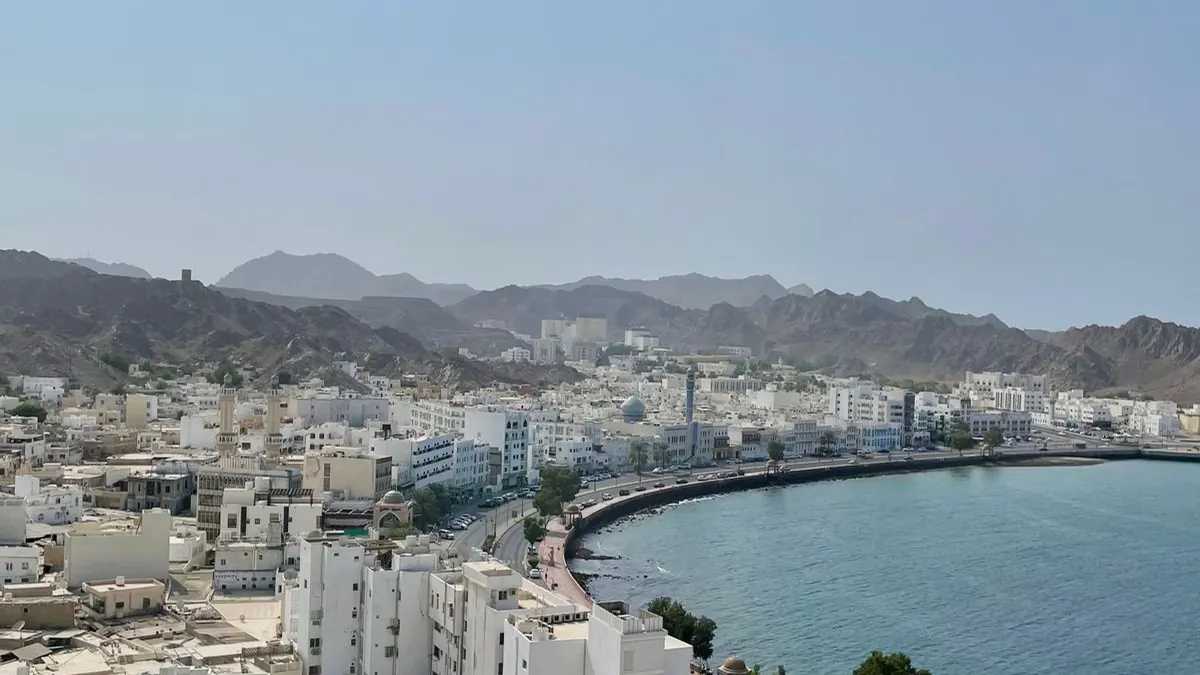
The cost of living in Muscat depends mostly on rent and, for families, school fees. Indicative 2026 estimates put a one-bedroom apartment at roughly RO 180 to RO 450 a month and a two-bedroom at about RO 300 to RO 710, while international school fees range from a few hundred to over RO 11,000 a year. Official survey data shows that the average non-Omani household spends about RO 402 a month, with almost half going on housing and utilities.
What the official data says about expatriate spending
The National Centre for Statistics and Information (NCSI) Household Income and Expenditure Survey, reported by the Oman Observer in September 2026, gives a useful starting point:
- Average monthly spending by non-Omani households: about RO 402.
- Average monthly income of non-Omani households: about RO 717.
- Share of spending on housing, water, electricity and fuel: about 48%.
- Food and beverages: about 16.5%; transport about 6.6%; restaurants and hotels about 5.25%; education about 5.2%.
These are averages across all expatriate households, including many single workers in shared or employer-provided housing. A professional family renting its own apartment in Muscat and paying international school fees will spend considerably more.
Rent in Muscat
Housing is the biggest monthly cost. Oman does not publish an official rental index for Muscat, so the figures below are indicative estimates as of mid-2026, compiled by a property data site from Savills reports and listings on major property portals.
| Unit type | Typical average (RO/month) | Realistic range (RO/month) |
|---|---|---|
| Studio | about 210 | 150 – 280 |
| One-bedroom apartment | about 290 | 180 – 450 |
| Two-bedroom apartment | about 430 | 300 – 710 |
Location makes a big difference. Areas such as Al Khuwair, Ghubrah, Ruwi and Al Mawaleh are among the more affordable options, while Qurum, Madinat Al Sultan Qaboos, Muscat Hills and Al Mouj sit at the higher end. Villas for families can cost considerably more.
If your job allows it, living outside the capital can lower your housing bill: rents in Salalah, Sohar and other regional cities are generally lower than in Muscat. The busiest renting season in Muscat is usually September to November, when competition for good apartments is strongest, so start your search early if you are relocating then.
Renting rules to know
- Leases are usually for 12 months and must be registered with the municipality to be protected by the tenancy law.
- Landlords typically ask for post-dated cheques, so you will need a local bank account and usually your resident card.
- Under the tenancy rules, rent cannot be increased during the first three years, and later increases are capped at 7% a year.
- Most apartments are unfurnished, so budget for furniture, air conditioning maintenance and a deposit.
Transport costs
Most residents of Muscat rely on a car, as the city is spread out and public transport coverage is limited. Petrol is relatively cheap. For October 2026, prices reported were:
| Fuel | Price per litre (October 2026) |
|---|---|
| M91 (regular) | 229 baisa |
| M95 (super) | 239 baisa |
| Diesel | 258 baisa |
Fuel prices are reviewed monthly, so check the latest figures. Other car costs include insurance, registration, maintenance and, for new arrivals, possibly a driving licence conversion or test, depending on your nationality.
Mwasalat, the national transport company, runs city buses in Muscat as well as airport and intercity routes at modest fares. Taxis and ride-hailing apps are also available. Many employers provide a transport allowance or company transport, so check your offer.
Food and groceries
Food and beverages account for about 16.5% of average expatriate household spending, according to the NCSI survey. Costs depend heavily on your habits:
- Local and regional produce, rice, bread and staples are generally affordable, especially in hypermarkets and local markets.
- Imported brands, specialty items and alcohol are more expensive.
- Eating out ranges from inexpensive local restaurants and cafes to high-end hotel dining.
Shopping at large hypermarkets, buying local brands and cooking at home are the easiest ways to keep the food budget under control.
School fees in Muscat
For families, education can be the largest expense after rent. Annual fees published for the 2026/2027 school year vary widely by school and grade:
| School (examples) | Annual fees (RO) |
|---|---|
| Indian School Muscat | 450 – 530 |
| Sri Lankan School Muscat | 770 – 1,670 |
| Modern Generation International Private School | 1,250 – 2,950 |
| British School Muscat | 4,400 – 10,666 |
| ABA Oman International School | 5,050 – 10,210 |
| The American International School of Muscat | 5,790 – 11,560 |
Community schools that follow home-country curricula are usually far cheaper than premium international schools. Additional costs can include registration fees, uniforms, books and transport. Some senior job packages include an education allowance, so ask about it when you negotiate. Remember that to sponsor your family, you will need to meet the Royal Oman Police salary requirement for a family joining visa.
Utilities, phone and other costs
- Electricity and water: billed according to tiered tariffs. Bills rise sharply in summer because of air conditioning. Check the current tariff with your electricity supply company and the regulator before you sign a lease, and ask whether utilities are included.
- Mobile and internet: several operators offer prepaid and postpaid packages. Home fibre is widely available in Muscat.
- Healthcare: many employers provide medical insurance; confirm the coverage, especially for dependants.
How to plan your budget
- Start with rent, which is likely to be your largest fixed cost.
- Add school fees if you are moving with children.
- Include a car, fuel and insurance, or transport costs if you will not drive.
- Add food, utilities, phone and a buffer for summer electricity bills and travel home.
- Compare the total with your offer, focusing on the basic salary plus housing and transport allowances.
Ready to look for a role? Browse jobs in Muscat or set up a free job alert.
Key takeaways
- Housing is the largest cost: roughly RO 180–450 for a one-bedroom and RO 300–710 for a two-bedroom (indicative, 2026).
- The average non-Omani household spends about RO 402 a month, almost half on housing and utilities.
- Fuel is relatively cheap, but most residents need a car.
- School fees range from a few hundred to over RO 11,000 a year.
- Check what your package covers, including housing, transport, education and medical insurance.
FAQ
How much is rent in Muscat in 2026?
Indicative 2026 estimates put a studio at about RO 150 to RO 280, a one-bedroom apartment at about RO 180 to RO 450 and a two-bedroom at about RO 300 to RO 710 a month, depending on the area and building.
How much does an expatriate household spend per month in Oman?
According to the NCSI Household Income and Expenditure Survey reported in September 2026, non-Omani households spend about RO 402 a month on average, with around 48% going on housing and utilities.
Do I need a car in Muscat?
Most residents use a car because the city is spread out and public transport is limited. Fuel is relatively cheap; in October 2026 M91 petrol cost 229 baisa per litre.
How much are international school fees in Muscat?
Published 2026/2027 fees range from about RO 450 a year at some community schools to more than RO 11,000 at premium international schools, depending on the grade.
Sources
- Oman Observer - Salaries drive Oman expat income, food drives spending (NCSI survey)
- Sands of Wealth - Muscat rents (2026 estimates based on Savills and portal listings)
- Expat Focus - Oman property rental prices and tenancy rules
- YallaMotor - Fuel prices in Oman, October 2026
- International Schools Database - Muscat school fees
- Edarabia - Bus routes in Muscat
- Gulf News - Salary ceiling lowered for family visa
More from the blog

Learning to Code in 2026: Where to Start
A practical beginner's roadmap to coding in 2026: pick a goal, learn Python or JavaScript, use AI wisely and build projects employers notice.

How to Spot and Avoid Job Scams in Oman
Genuine employers in Oman never charge you to get a job. Learn the common scam patterns, the red flags, how to verify an offer and where to report fraud.

Banking, Finance and Accounting Jobs in Oman: Career Guide
Oman's financial sector is growing fast. Learn which banking, finance and accounting roles are in demand, how Omanisation shapes hiring and what the 2025 sector certificate means for you.